
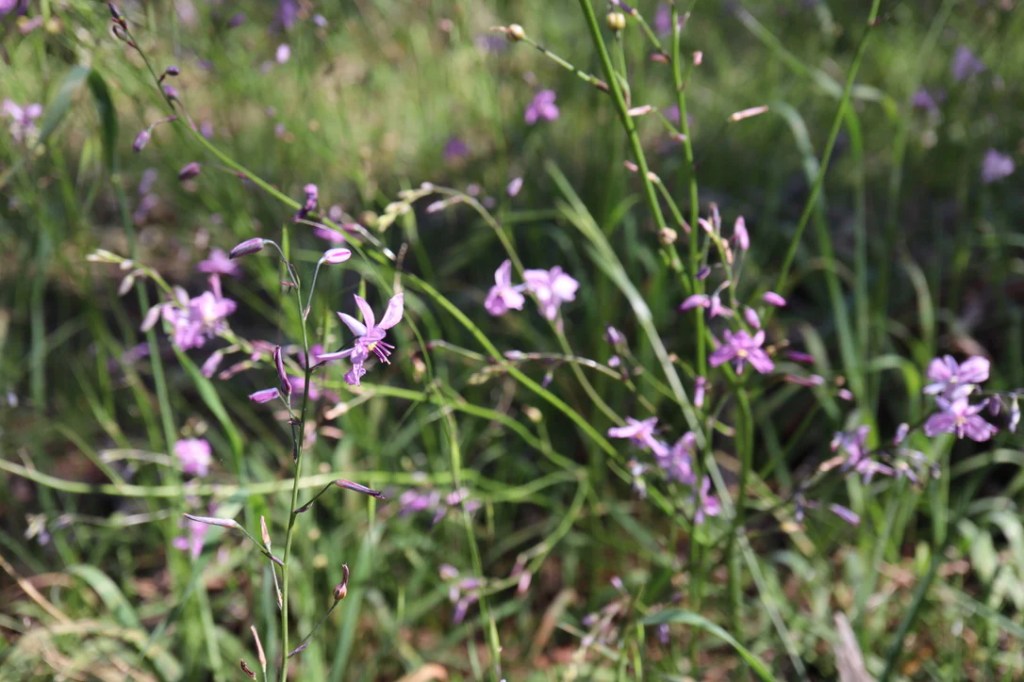
Chocolate Lily | Arthropodium strictum
| Size of Plant: Small tufted/clumping. grass like. Edible Part: Tubers Suggested use in cooking: Nutty. mild taste. Cook roasted. (flowers choc scent) Fun Fact: Roots were a sweet snack for First Nations people — yum! Traditional Use: primarily as a food source, with both the edible tubers and flowers being consumed. The juicy tubers were eaten raw or cooked (often roasted in earth ovens), while the fragrant flowers were used in salads and as garnishes. The plant also provided material for string from its long, fibrous roots. |
|---|

Vanilla Lily | Arthropodium milleflorum
| Size of Plant: tufted, grass-like perennial herb Edible Part: Tubers, flowers Suggested use in cooking: Sweet, mild taste. Tubers roasted, flowers edible. Cam be eaten raw or roasted. They are best harvested young, as they can become bitter with age. Fun Fact: Flowers smell sweet, and the roots are roasted like potatoes! Traditional Use: was as a food source, with the edible tubers eaten raw or roasted. The fragrant, edible flowers were sometimes used as a garnish or as a medicinal aid to cleanse the blood. |
|---|
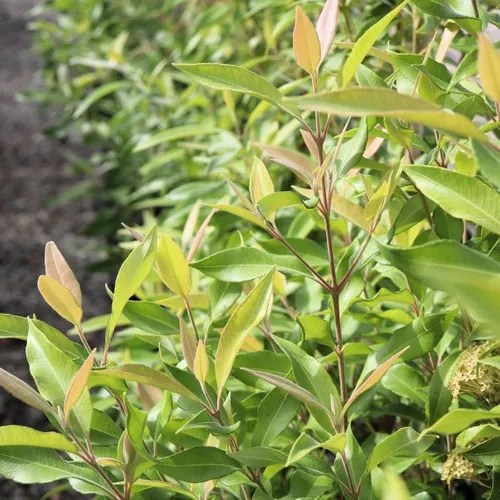
Lemon Myrtle | Backhousia citriodora
| Size of Plant: Small tree/shrub Edible Part: Leaves Suggested use in cooking: Strong lemony taste. Tea, baking, marinades Fun Fact: Leaves smell like lemon sherbet — one sniff and you’ll smile! Traditional Use: Traditionally, Indigenous Australians used lemon myrtle for culinary flavoring and as a bush medicine, including a paste from crushed leaves to heal wounds and a way to repel insects by burning the leaves. The leaves were used fresh or dried in cooking, and the essential oil, which is highly antimicrobial, was used in a variety of healing applications. |
|---|
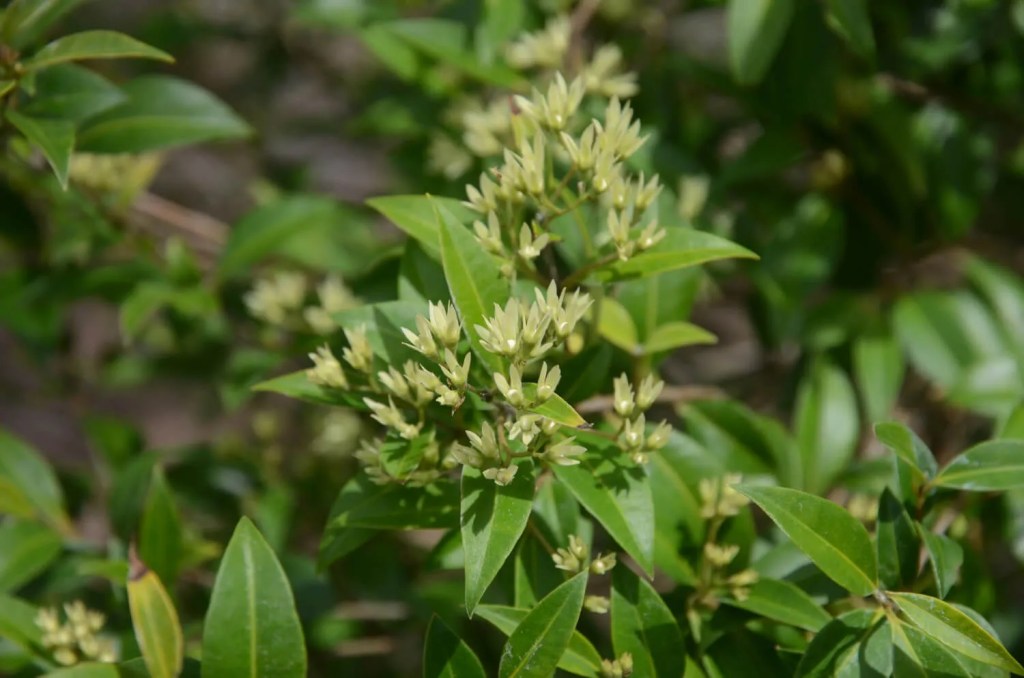
Cinnamon Myrtle | Backhousia myrtifolia
| Size of Plant: Medium shrub Edible Part: Leaves Suggested use in cooking: Cinnamon sweet taste. Tea, desserts, sauces. Fun Fact: Smells like cinnamon and grows happily in the Aussie shade Traditional Use: Traditionally, the Indigenous communities of Australia have used it for its medicinal properties, including treating microbial infections, dyspepsia, and colic. The strong, hard wood was also used for tools, boomerangs, and fishing rods. |
|---|
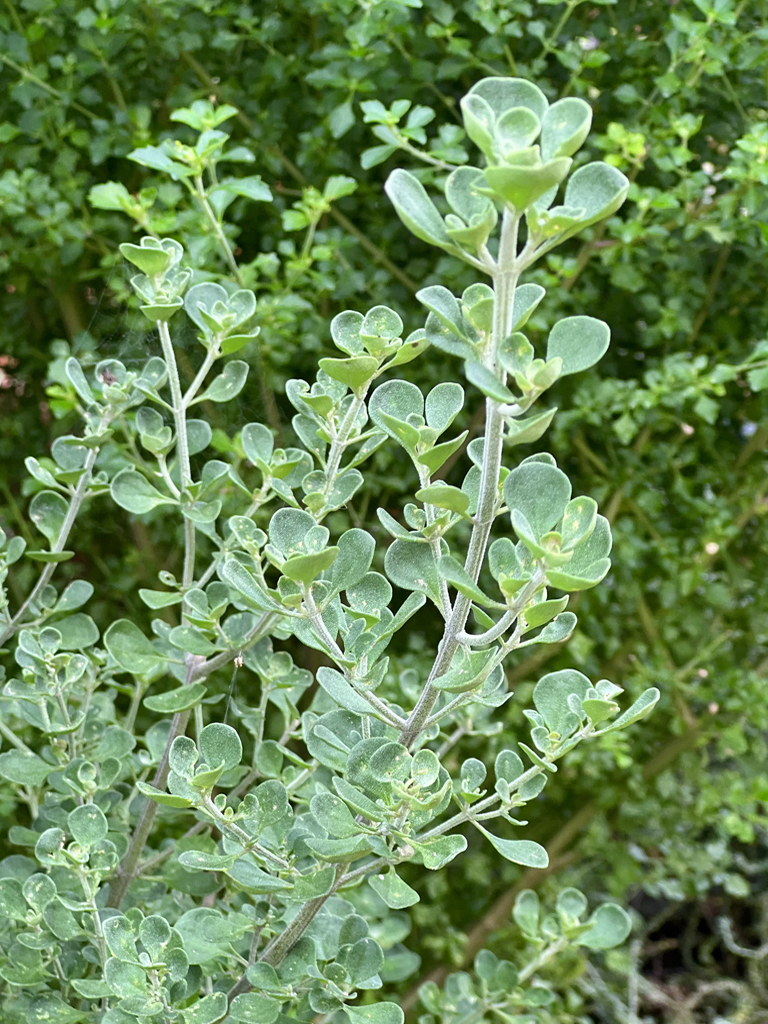
Native Oregano | Prostanthera rotundifolia
| Size of Plant: Small shrub Edible Part: Leaves Suggested use in cooking: Strong herb flavour. Use like oregano. Fun Fact: The leaves smell like pizza herbs — but they’re native! Traditional Use: Used by Indigenous Australians as a medicinal herb to treat headaches and colds. The aromatic leaves were also used to help clear a stuffy nose when crushed and smelled. It is now also used as a culinary herb and for its ornamental value. |
|---|
 Home
Home 