
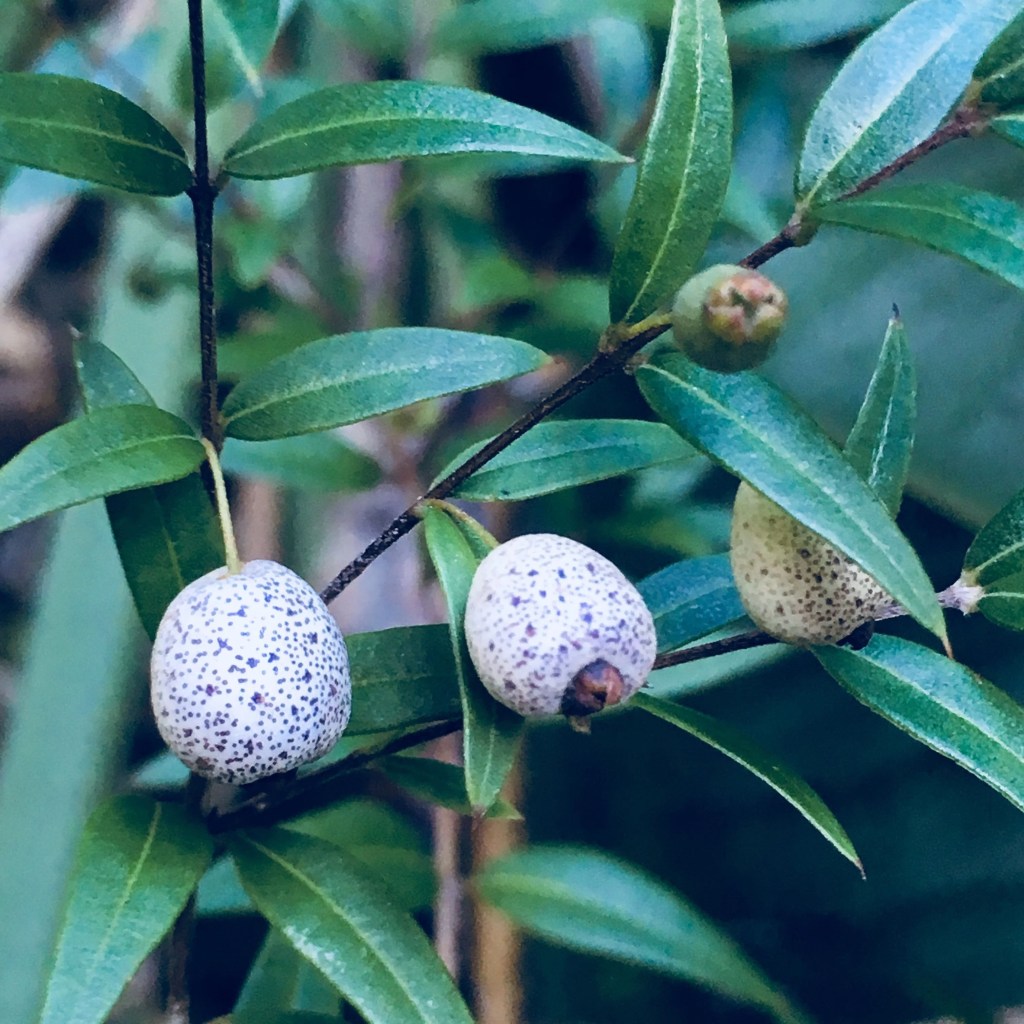
Midyim Berry | Austromyrtus dulcis
| Size of Plant: Small shrub Edible Part: Berries Suggested use in cooking: Look like blueberries. Nutmeg-ish flavour. Snacks, desserts, jams. Fun Fact: Its berries are speckled like mini purple marbles — very snackable! Traditional Use: traditionally used by Indigenous Australians as a food source and for medicine. The sweet berries were a valued bush tucker, and the leaves and berries were used topically for wounds or as a tonic to aid immunity. It was also used to treat coughs and colds. |
|---|
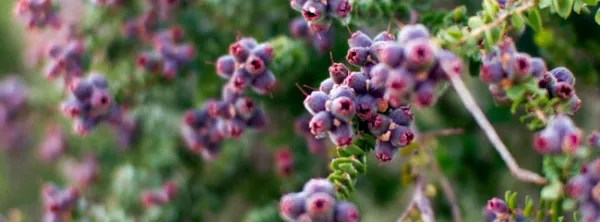
Muntries | Kunzea pomifera
| Size of Plant: Groundcover shrub Edible Part: Berries Suggested use in cooking: Tangy, spicy taste. Crunchy spiced apple flavour. Jams, sauces. Fun Fact: Tiny berries with a big taste — like spicy apples! Traditional Use: A significant food source for Aboriginal Australians, who ate the berries fresh, dried them into sun-baked cakes for storage and trade, and used them in their diet. Early European settlers also incorporated the fruit into jams, chutneys, pies, and other preserves. |
|---|
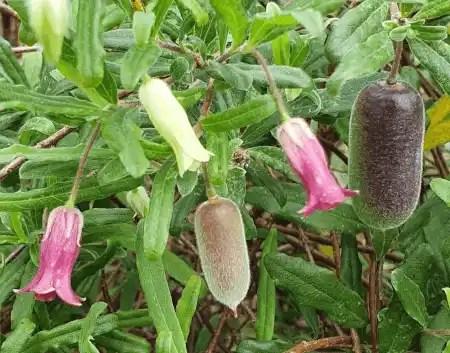
Apple Berry | Billardiera scandens
| Size of Plant: Climber or ground Edible Part: Fruit Suggested use in cooking: Similar to stewed apple or kiwifruit. Fresh eating. Fun Fact: Tastes like a cross between a kiwifruit and a pear — surprise! Traditional Use: The traditional uses of Billardiera scandens by Aboriginal peoples include eating the ripe fruits, and using the tough leaves to weave dilly bags and baskets. The fruits are described as tasting like stewed apples or kiwifruit, and they were eaten raw when ripe or roasted when unripe. |
|---|
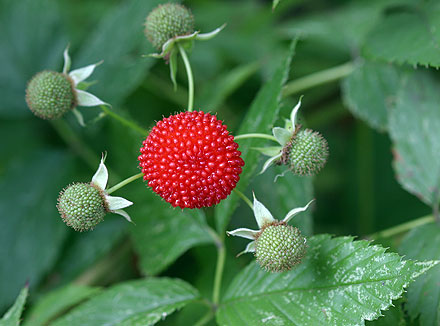
Atherton Raspberry | Rubus probus
| Size of Plant: Shrub/vine Edible Part: Fruit Suggested use in cooking: Tart, raspberry taste. Fresh eating, jam. Fun Fact: tastes like your favorite tart jam! Traditional Use: Was used by Indigenous Australians for its edible fruit and medicinal leaves. The sweet berries were a food source, while a tea made from the leaves was used to treat stomach complaints and other ailments. Culturally, it has been a food source with nutritional and medicinal benefits, and its leaves have been used for general health. |
|---|

Native Guava | Eupomatia laurina (Bolwarra)
| Size of Plant: Shrub Edible Part: Fruit Suggested use in cooking: Sweet taste. often compared to kiwi or regular guava, with notes of nutmeg. Fresh eating & jam. Fun Fact: One of the oldest native fruits — spicy and perfume-y! Traditional Use: Traditionally, the inner bark of the Bolwarra (Eupomatia laurina) was used by Aboriginal people to make fishing lines. The fruit is sweet and edible, often prepared as a spice, jam, jelly, or beverage, while some research has identified medicinal compounds in the root bark. |
|---|
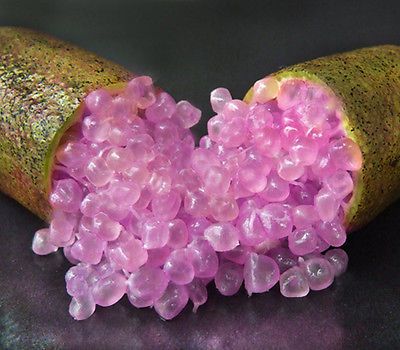
Finger Lime (Pink) | Citrus australasica (Pink)
| Size of Plant: Small tree/shrub Edible Part: Fruit Suggested use in cooking: Citrus ‘caviar’ tangy. Garnish & sauces. Fun Fact: Tiny finger-shaped limes filled with citrus ‘pop rocks’! Traditional Use: Was used by Indigenous Australians for food, to stay hydrated, and for medicinal purposes, such as applying the pulp to sores and using it to boost immunity due to its high vitamin C content. The pulp and juice were applied topically to cuts, sores, and infections to aid healing and prevent infection, while the fruit was also eaten as a source of hydration and general nutrition. |
|---|
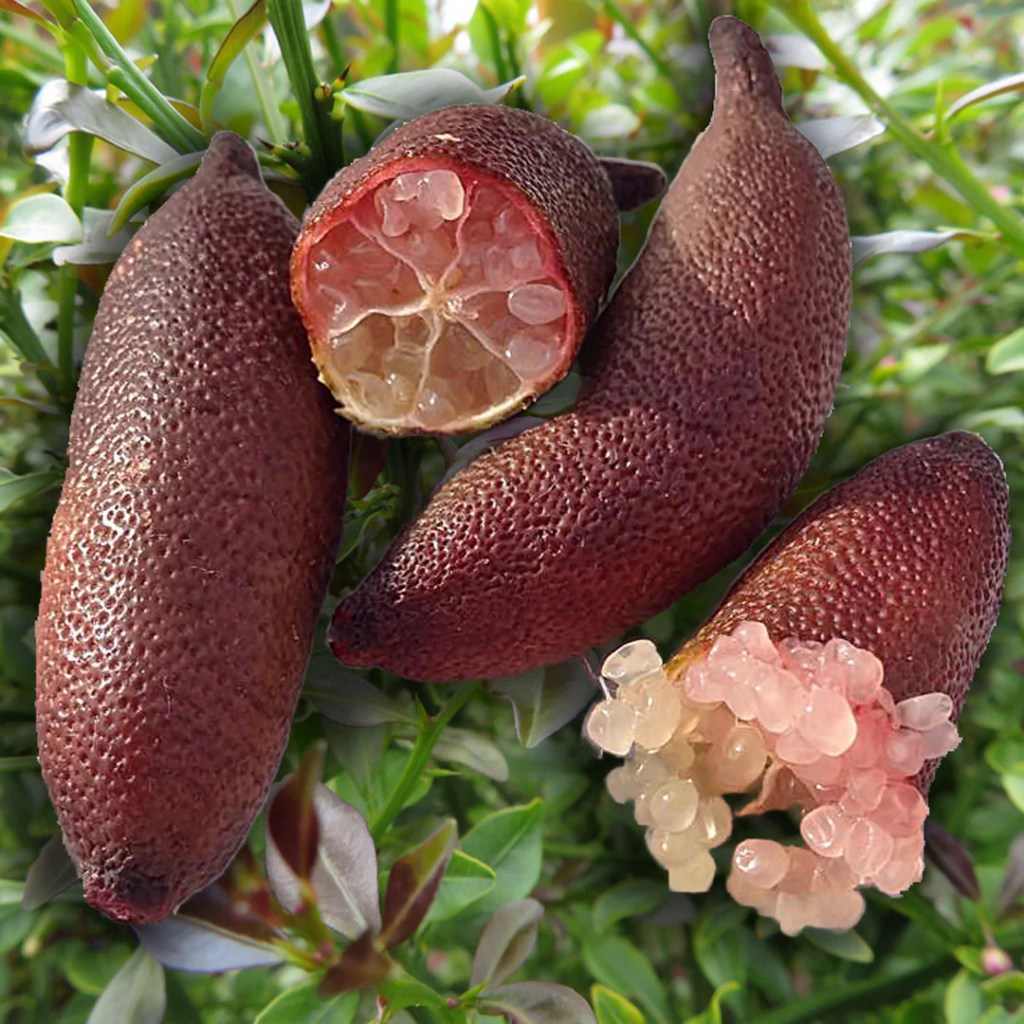
Finger Lime (Red) | Citrus australasica (Red)
| Size of Plant: Small tree/shrub Edible Part: Fruit Suggested use in cooking: Zesty, fresh citrus taste. Garnish & sauces. Fun Fact: Red-fleshed version of the finger lime — looks like ruby caviar! Traditional Use: Traditional uses of the red finger lime by Indigenous Australians include consuming the fruit for nutrition and hydration, and using the leaves and bark as a medicine. The fruit was a source of Vitamin C and other antioxidants, while the leaves and bark were applied to wounds or brewed into teas for ailments like colds. |
|---|
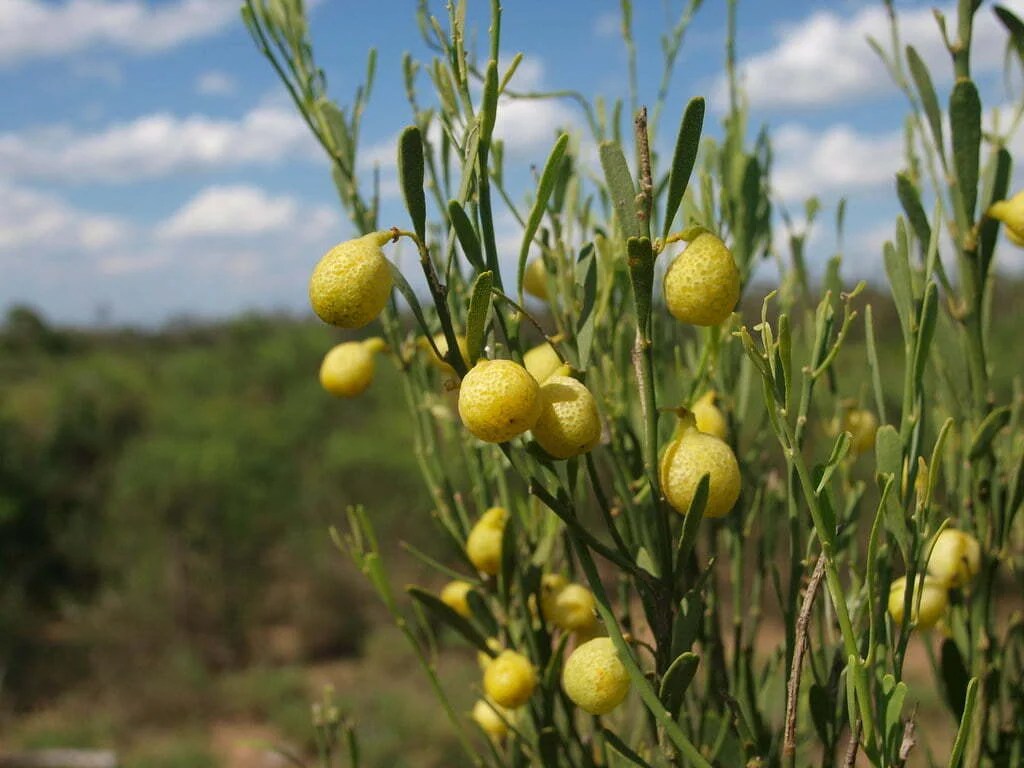
Desert Lime | Citrus glauca
| Size of Plant: Small tree Edible Part: Fruit Suggested use in cooking: Strong citrus flavor, much more so than a typical lime or lemon. Cooking & preserves. Fun Fact: Desert lime trees laugh in the face of heat and drought! and is prized for its sharp, refreshing taste Traditional Use: An important food source for Indigenous Australians, who ate it whole and used it to make cordials, jams, and sauces. It was also valued for its thirst-quenching properties and for its unique, intense citrus flavor in a variety of sweet and savory dishes. Modern uses draw heavily on these traditional methods, including making marmalades, pickles, and other products, and it is also now used in cosmetics. |
|---|
 Home
Home 