
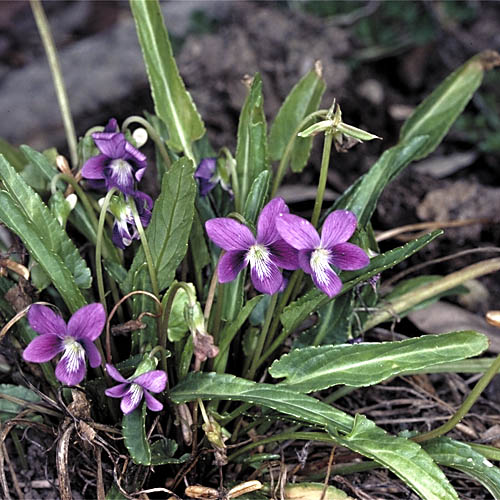
Native Violet (Showy Violet, Mountain Violet)| Viola betonicifolia
| Size of Plant: 10–20 cm high. Clump-forming rather than mat-forming. Edible Part: Flowers. Young leaves (mild flavour) Suggested use in cooking: Use striking purple flowers as garnish for desserts, salads, and cheese boards. Crush flowers lightly to tint syrups or decorations. Add young leaves to green salads or herb mixes. Fun Fact: This species is the host plant for the rare Arrowhead Blue Butterfly, making it an important biodiversity plant as well as an edible one! Traditional Use: Used as a purgative, antipyretic (fever-reducing), astringent, and diaphoretic (sweat-inducing). It is also used to treat a variety of ailments, including coughs, skin conditions, nervous disorders like epilepsy, sinusitis, and kidney and lung diseases. The leaves can be eaten as a vegetable, and the flowers can be made into a soothing cordial for sore throats. |
|---|
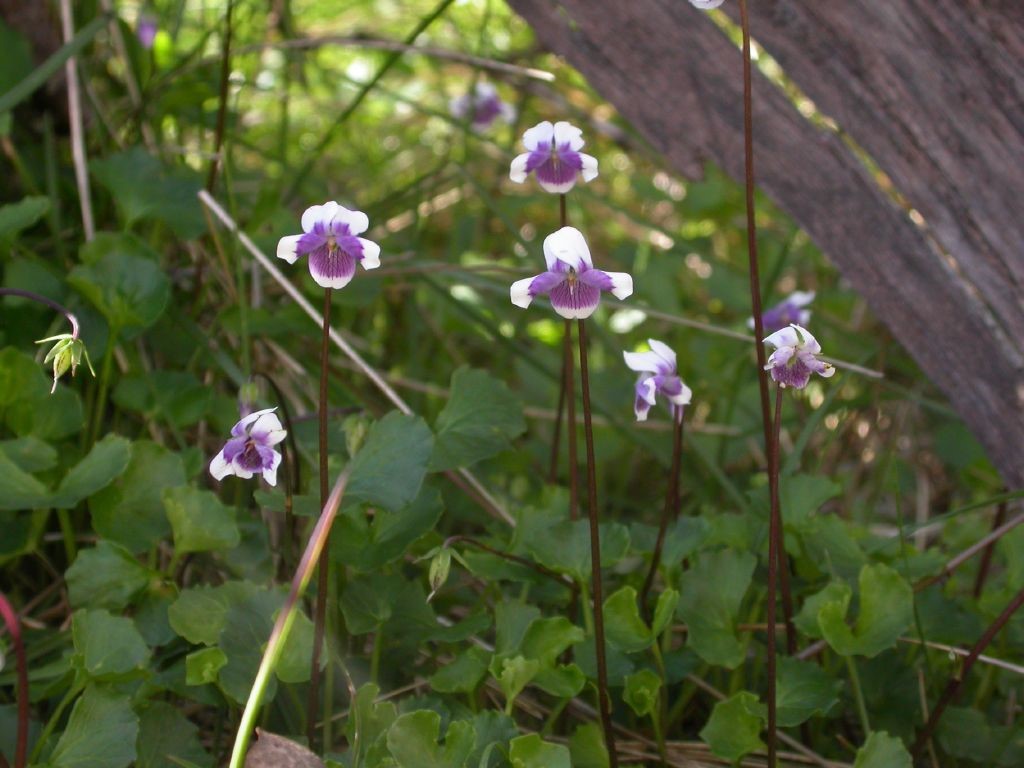
Native Violet (Stately Violet)| Viola eminens
| Size of Plant: Spreads 30–60 cm as a soft groundcover Edible Part: Flowers (mild, slightly sweet); Leaves (tender, mild-flavoured when young). Suggested use in cooking: Use fresh flowers as a garnish on cakes, salads, cocktails. Add young leaves to salads or sandwiches. Freeze flowers into ice cubes for drinks. Beautiful in bush-themed dessert plating. Fun Fact: Viola eminens can root at the nodes as it creeps, allowing one plant to spread and form a natural “living carpet.” Traditional Use: Traditional uses include eating the flowers in salads and using them to make syrups. Medicinally, the leaves and flowers are traditionally used to treat respiratory issues like coughs and bronchitis due to their expectorant and demulcent properties. Additionally, violets have been traditionally used to treat skin conditions and inflammation. |
|---|
 Home
Home 