

Billy Buttons | Pycnosorus globosus
| Size of Plant: Clumping perennial with upright flower stems Edible Part: Not for human eating. Not a snack for us — but a feast for pollinators. Garden Role: Produces bright yellow, globe-shaped flowers that add seasonal colour and help attract bees, butterflies and other beneficial insects. Fun Fact: The cheerful round flower heads look like golden buttons held above the foliage on tall stems. Biodiversity value: Billy Buttons provide floral resources for pollinating insects and help strengthen the biodiversity and resilience of the Native Food Forest. |
|---|
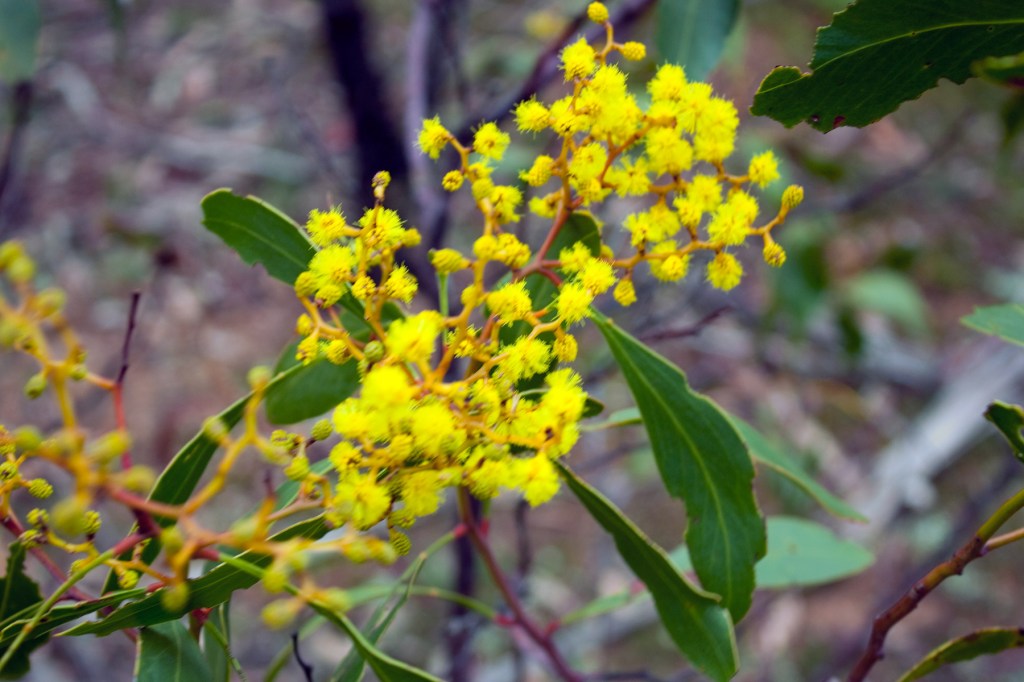
Golden Wattle | Acacia pycnantha
| Size of Plant: Large shrub or small tree Edible Part: Mature seeds, after appropriate preparation Suggested use in cooking: Correctly identified seeds can be processed, roasted and ground into flour for breads and other foods. Use properly prepared wattleseed, as seeds from different wattle species are not interchangeable. Garden Role: Golden flower heads provide pollen for visiting insects and add seasonal colour. Fun Fact: Golden Wattle is Australia’s national floral emblem, bringing masses of bright yellow flower heads to the garden. Cultural and historical note: Aboriginal plant-use records describe Golden Wattle seeds being ground for flour and its gum being used as food. It creates opportunities to explore native foods and seasonal knowledge. |
|---|
Photo: Rexness, CC BY-SA 2.0, via Wikimedia Commons.
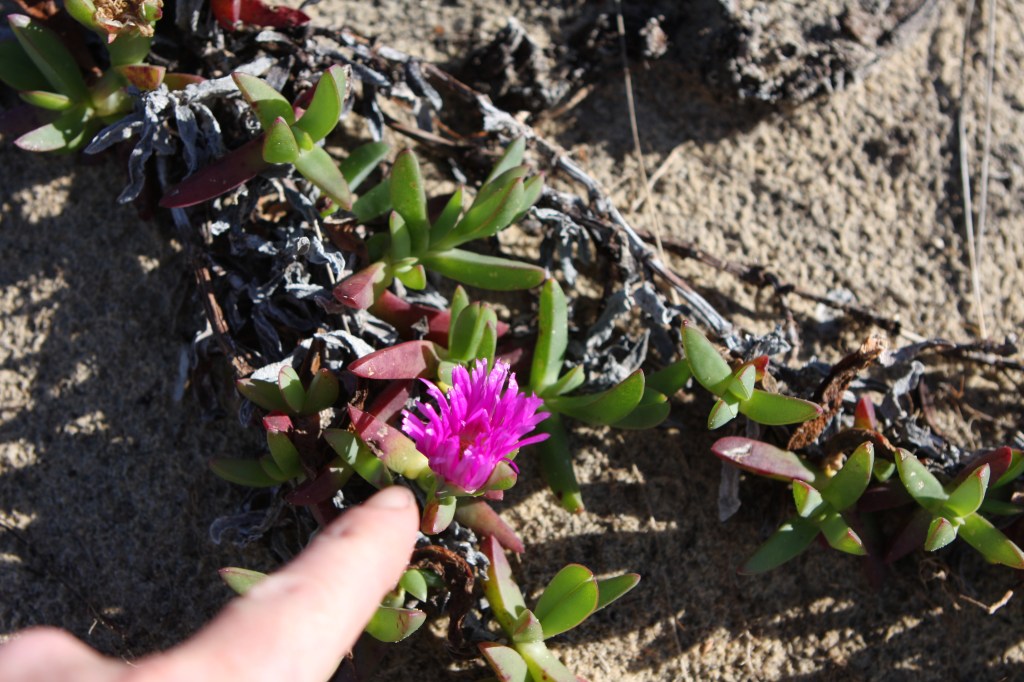
Native Pig Face | Carpobrotus rossii
| Size of Plant: Low, spreading succulent groundcover Edible Part: Fleshy leaves and the pulp of ripe fruit Suggested use in cooking: Use the fleshy leaves as a salty addition to salads or cooked dishes. When fruit is ripe, squeeze out the edible inner pulp and discard the outer skin. Garden Role: Pink flowers attract bees, butterflies and other insects, while spreading foliage helps cover the soil. Fun Fact: Bright pink flowers attract bees and other insects, while its creeping stems help cover and protect the soil. Cultural and historical note: Also known as Karkalla, this coastal native has a history as an Aboriginal food plant. Its ripe fruit provides a sweet-salty seasonal harvest. |
|---|
Photo: J Brew, CC BY-SA 2.0, via Wikimedia Commons.
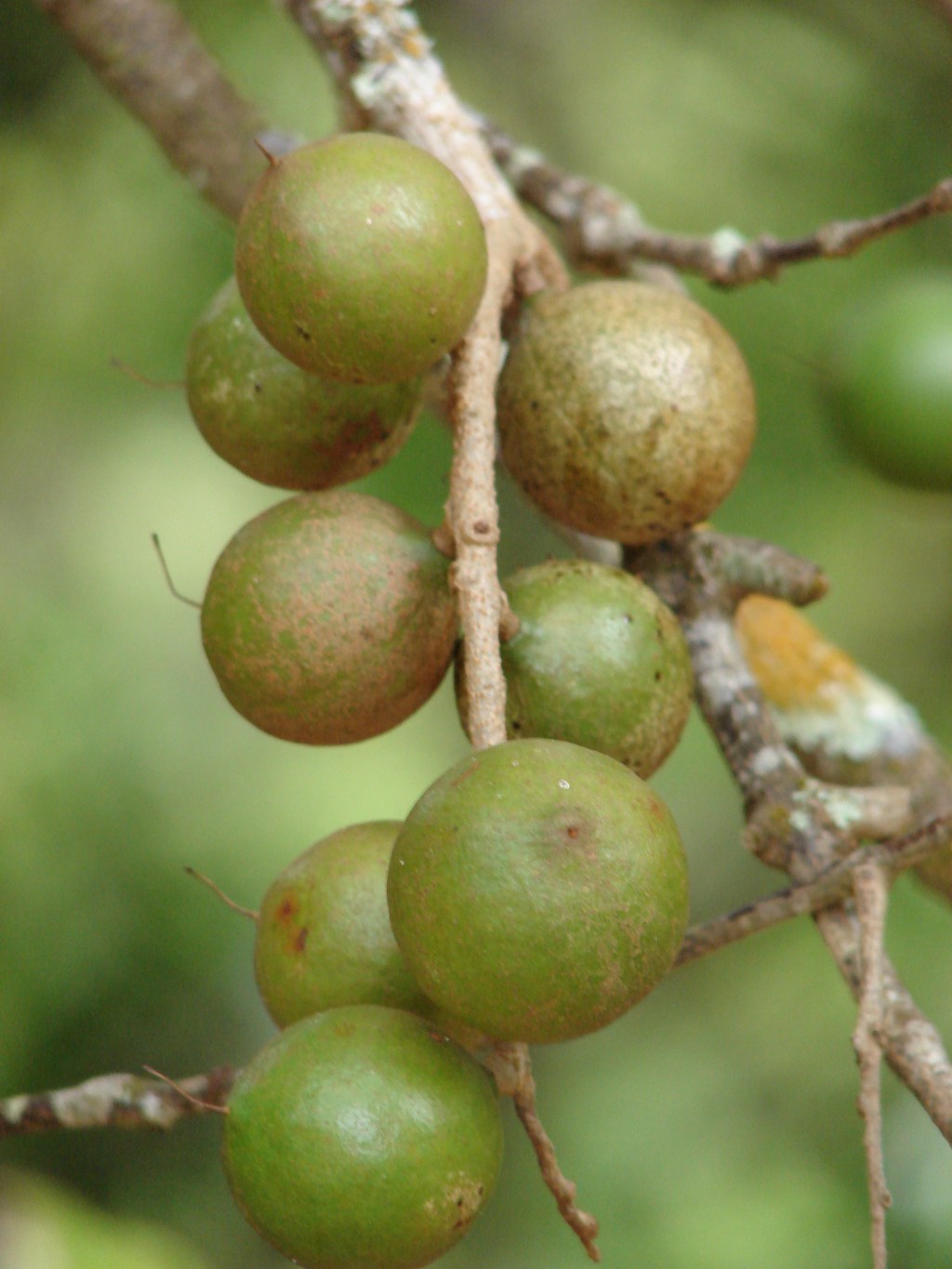
Macadamia ‘Lotsa Nuts’ | Macadamia integrifolia ‘Lotsa Nuts’
| Size of Plant: Compact evergreen large shrub or small tree Edible Part: Kernels inside mature nuts Suggested use in cooking: Remove the outer husk and crack the hard shell to reach the kernel. Enjoy the kernels fresh or roasted, or use them in baking, salads and nut butter. Garden Role: Spring flowers attract bees and other insects, whose visits help pollinate the nut crop. Fun Fact: Hanging cream flower spikes are followed by nuts protected by a green husk and a hard shell. Cultural and historical note: Macadamias are native to eastern Australian rainforest and have a long history as an Aboriginal food. ‘Lotsa Nuts’ is a garden selection grown for its edible nuts and compact habit. |
|---|
Species photograph of Macadamia integrifolia. Photo: Forest & Kim Starr, CC BY 3.0, via Wikimedia Commons.
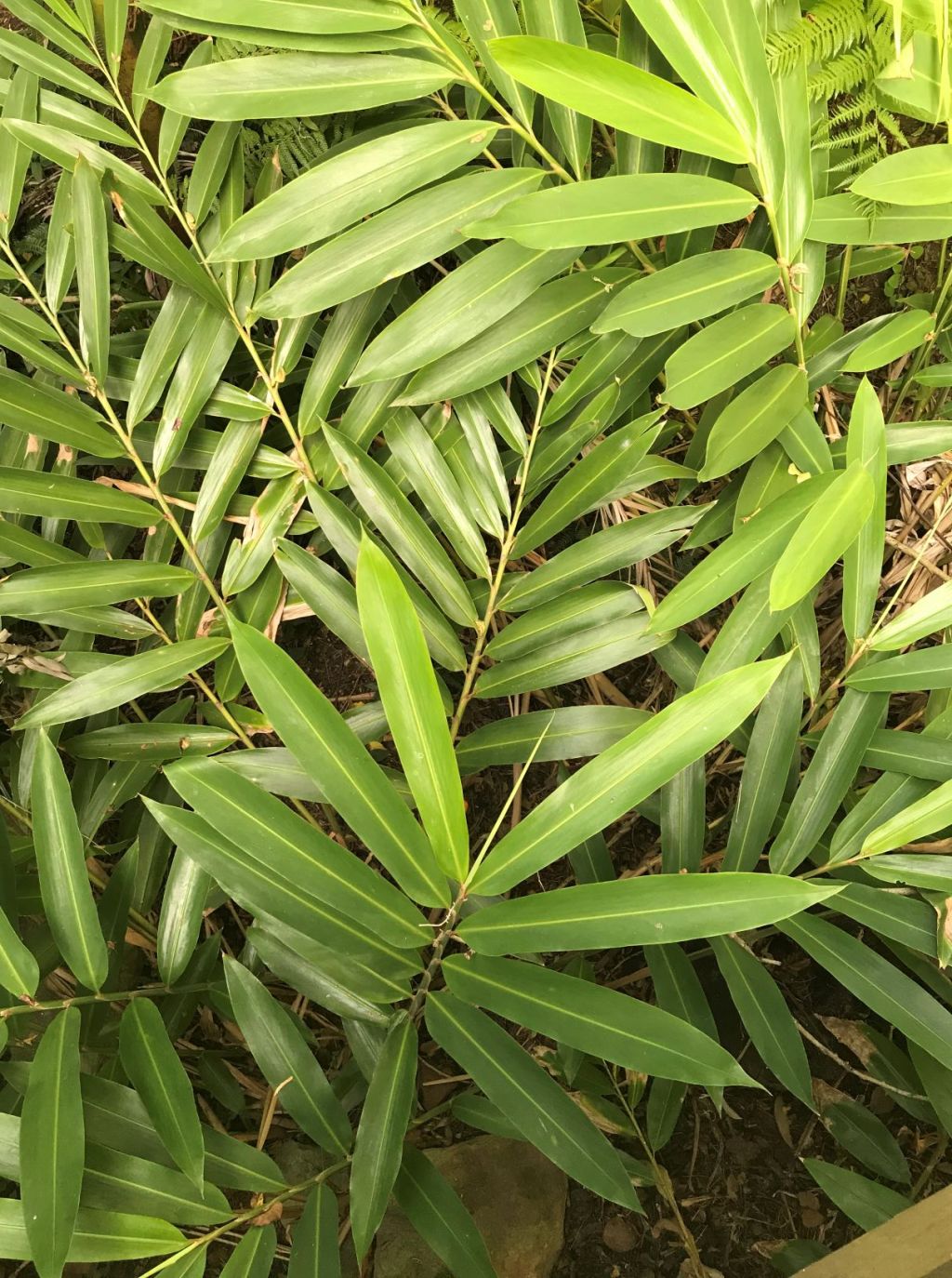
Native Ginger | Alpinia caerulea
| Size of Plant: Clumping perennial herb, growing up to 3 m tall Edible Part: Young rhizome tips and the white pulp inside ripe blue fruit Suggested use in cooking: Use the tender growing tips of the rhizomes as a mild ginger substitute in cooked dishes. Peel ripe blue fruit to reach the tangy white pulp around the seeds. Garden Role: Flowers attract native bees, and the large leaves provide nesting material for leaf-cutter bees. Fun Fact: Despite its name, its flavour is milder than kitchen ginger. Large leaves can also be used to wrap food for cooking. Cultural and historical note: Native Ginger is an Australian rainforest food plant with edible rhizome tips and fruit pulp. Its broad leaves also provide a sheltered microclimate for frogs and material for leaf-cutter bees. |
|---|
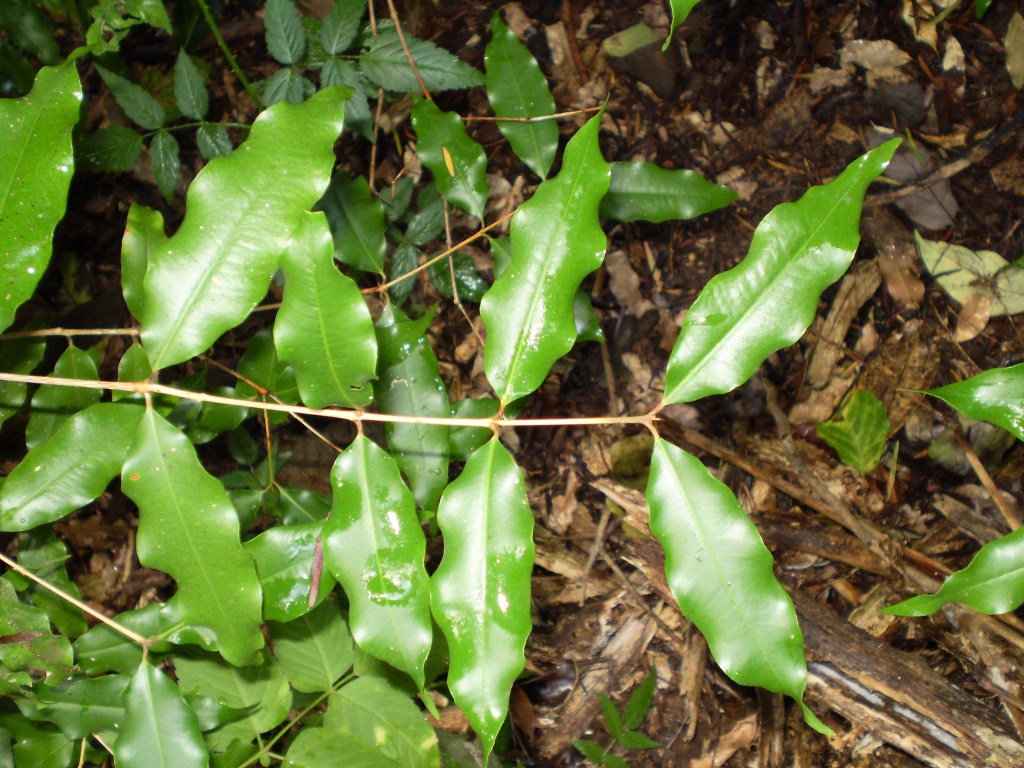
Anise Myrtle | Syzygium anisatum
| Size of Plant: Evergreen shrub or tree, commonly 3 to 8 m in gardens; can be kept smaller by pruning Edible Part: Aromatic leaves Suggested use in cooking: Use fresh or dried leaves to infuse tea, or finely grind dried leaves to flavour biscuits, breads, dressings and savoury dishes. Start with a small amount of this strongly flavoured herb. Garden Role: Scented white flowers attract bees and other visiting insects. Fun Fact: Crushing the glossy leaves releases a distinctive aniseed aroma. Scented white flowers add seasonal interest. Cultural and historical note: Anise Myrtle is native to eastern Australian rainforest. Its aromatic foliage is grown as a native culinary herb, bringing aniseed flavour to contemporary cooking. |
|---|
Photo: John Moss, Public domain, via Wikimedia Commons. Display cropped to fit.
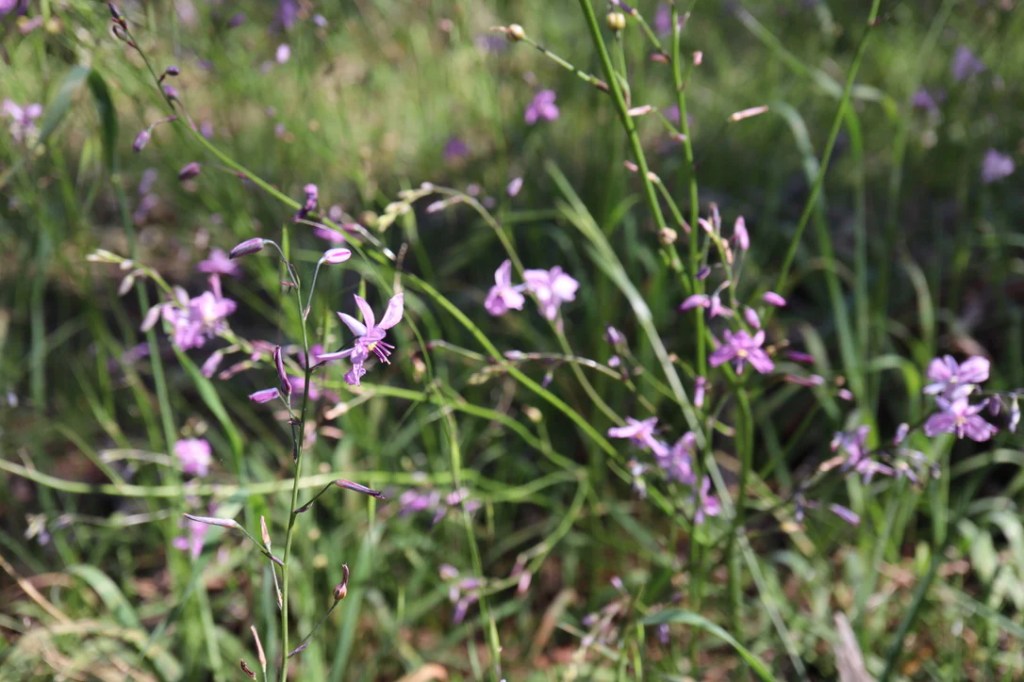
Chocolate Lily | Arthropodium strictum
| Size of Plant: Tufted perennial with grass-like leaves and upright flower stems Edible Part: Tubers, cooked Suggested use in cooking: Roast cultivated tubers before eating for their mild, nutty flavour. Leave some tubers to regrow after harvesting. Garden Role: Native bees buzz-pollinate the flowers, vibrating them to release pollen. Fun Fact: The mauve flowers have a distinctive chocolate scent. Cultural and historical note: Wurundjeri Woi-wurrung and Bunurong knowledge shared with the City of Melbourne describes roasting the tubers and maintaining the plant through careful harvesting and replanting. |
|---|


