
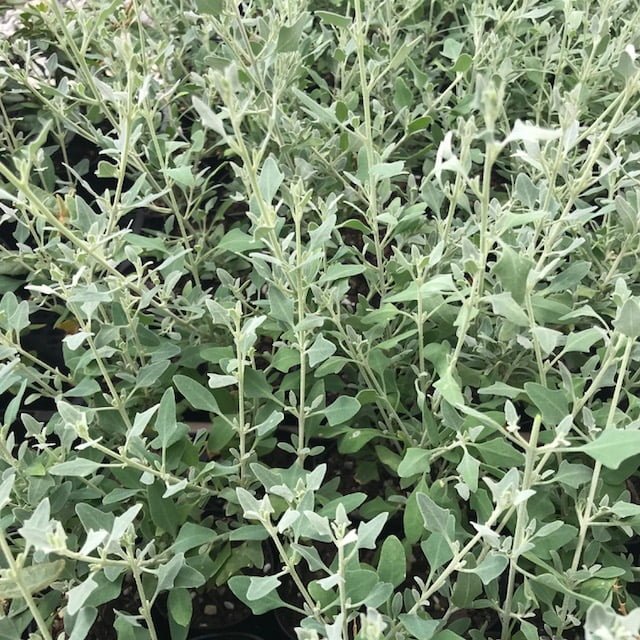
Creeping Saltbush | Rhagodia spinescens
| Size of Plant: Low-growing, spreading shrub Edible Part: Young leaves, cooked Suggested use in cooking: Cook the young leaves as a leafy green or use small amounts to add a salty flavour to savoury dishes. Fun Fact: Its grey-green foliage and tolerance of dry, saline conditions make it a useful plant for hardy garden cover. Cultural and historical note: Australian wild-food references record the cooked young leaves as edible. The plant also adds texture, shelter and resilience to native garden planting. |
|---|
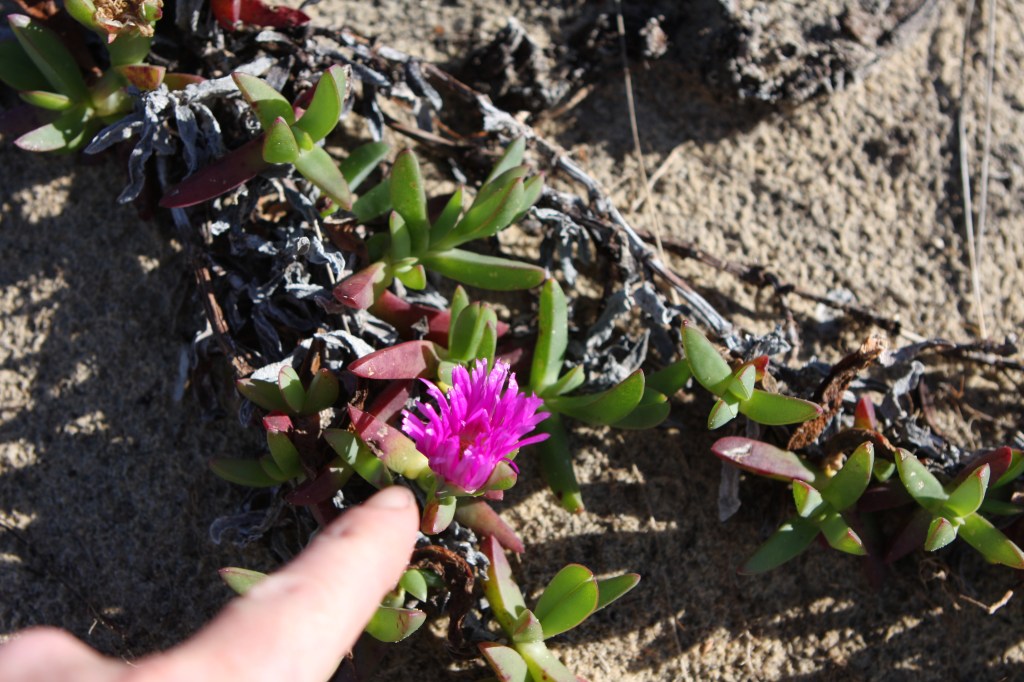
Native Pig Face | Carpobrotus rossii
| Size of Plant: Low, spreading succulent groundcover Edible Part: Fleshy leaves and the pulp of ripe fruit Suggested use in cooking: Use the fleshy leaves as a salty addition to salads or cooked dishes. When fruit is ripe, squeeze out the edible inner pulp and discard the outer skin. Fun Fact: Bright pink flowers attract bees and other insects, while its creeping stems help cover and protect the soil. Cultural and historical note: Also known as Karkalla, this coastal native has a history as an Aboriginal food plant. Its ripe fruit provides a sweet-salty seasonal harvest. |
|---|
Photo: J Brew, CC BY-SA 2.0, via Wikimedia Commons.


